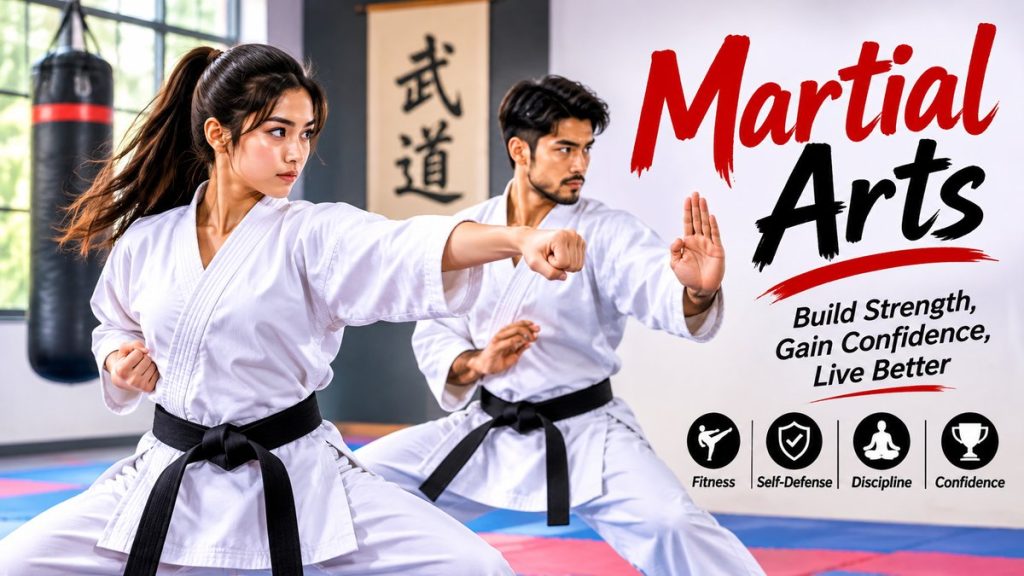
Martial Arts are traditional and modern fighting practices that combine physical techniques, mental discipline, and self-defense skills. Today, people of different ages practice these activities to improve their fitness, confidence, and personal safety. Moreover, these practices teach valuable life lessons such as patience, respect, and self-control. Whether someone wants to learn self-defense or develop a healthier lifestyle, martial arts training can offer many benefits. Therefore, understanding its history, different styles, and advantages can help beginners choose the right training method.https://en.wikipedia.org/wiki/Martial_arts
What Are Martial Arts?
Martial Arts refer to organized fighting systems that involve physical movements, defensive techniques, and controlled combat skills. These practices originated in different parts of the world, including Asia, Europe, and other regions. Furthermore, each style has its own techniques, traditions, and training methods.
Some popular styles include Karate, Taekwondo, Judo, Kung Fu, and Brazilian Jiu-Jitsu. For example, Karate focuses on punches, kicks, and defensive movements, while Judo emphasizes throwing and grappling techniques. Similarly, Taekwondo is widely recognized for its powerful kicking techniques. As a result, learners can choose a style according to their interests and physical abilities.
Popular Types of Martial Arts
There are many fighting styles available around the world. However, each one offers different skills and training experiences.
1. Karate
Karate is a Japanese fighting style that focuses on punching, kicking, blocking, and striking techniques. Additionally, students practice controlled movements and improve their balance through regular exercises. Consequently, this style helps develop coordination and discipline.
2. Taekwondo
Taekwondo is a Korean martial art known for its fast and powerful kicks. Moreover, practitioners learn flexibility, speed, and body control through structured training. Therefore, it is a popular choice for people interested in improving their physical fitness.
3. Judo
Judo is a Japanese combat sport that emphasizes throwing, grappling, and controlling opponents. Instead of relying mainly on punches and kicks, students learn how to use balance and technique effectively. As a result, it develops strength and strategic thinking.
4. Kung Fu
Kung Fu includes various traditional Chinese fighting styles. These systems combine movements, balance, breathing techniques, and defensive skills. Furthermore, many training programs include forms that help students improve coordination and concentration.
Benefits of Practicing Martial Arts
Regular training provides several physical and mental advantages. First of all, it improves cardiovascular fitness, muscle strength, and flexibility. In addition, consistent practice helps maintain a healthy body weight and increases overall energy.
Another important benefit is improved confidence. As students develop new abilities, they become more comfortable handling challenging situations. Meanwhile, training encourages patience, respect, and emotional control.
Furthermore, self-defense skills can help individuals understand how to respond to potentially dangerous situations. However, responsible practitioners should always prioritize avoiding conflict rather than starting fights.
Essential Tips for Beginners
Starting a new fighting style can feel challenging. Nevertheless, following some basic guidelines can make the learning process easier.
- Choose a suitable style: Select a discipline that matches your goals and interests.
- Find a qualified instructor: Professional guidance helps you learn techniques correctly.
- Practice regularly: Consistency improves performance and builds confidence.
- Use proper equipment: Wear suitable protective gear during training.
- Respect safety rules: Follow instructions to reduce the risk of injuries.
Additionally, beginners should avoid rushing advanced techniques because gradual progress creates a stronger foundation.
The Future of Martial Arts
The popularity of combat sports and traditional fighting systems continues to grow worldwide. Nowadays, modern training facilities use fitness equipment, digital learning resources, and structured exercise programs. Moreover, international competitions encourage athletes to develop their abilities and represent their countries.
At the same time, online tutorials and educational platforms make basic information more accessible. However, practical training under qualified instructors remains essential for learning safely and effectively.
Conclusion
Martial Arts offer much more than physical fighting techniques. They encourage discipline, confidence, fitness, respect, and personal development. Although learning requires patience and regular practice, the long-term benefits can be valuable for people of different ages. Ultimately, choosing a suitable style and following proper training methods can help individuals build a healthier, stronger, and more confident lifestyle.
Adjust the draft to exactly 600 wordsKeep keyword density between 1 and 2%